Grandes referentes
The origins of cyberpunk
The origins of cyberpunk are rooted in the New Wave science fiction movement of the 1960s and 1970s, where New Worlds, under the editorship of Michael Moorcock, began inviting and encouraging stories that examined new writing styles, techniques, and archetypes. Reacting to conventional storytelling, New Wave authors attempted to present a world where society coped with a constant upheaval of new technology and culture, generally with dystopian outcomes. Writers like Roger Zelazny, J. G. Ballard, Philip José Farmer, Samuel R. Delany, and Harlan Ellison often examined the impact of drug culture, technology, and the sexual revolution with an avant-garde style influenced by the Beat Generation (especially William S. Burroughs' science fiction writing), Dadaism, and their own ideas.[15][16] Ballard attacked the idea that stories should follow the "archetypes" popular since the time of Ancient Greece, and the assumption that these would somehow be the same ones that would call to modern readers, as Joseph Campbell argued in The Hero with a Thousand Faces. Instead, Ballard wanted to write a new myth for the modern reader, a style with "more psycho-literary ideas, more meta-biological and meta-chemical concepts, private time systems, synthetic psychologies and space-times, more of the sombre half-worlds one glimpses in the paintings of schizophrenics.
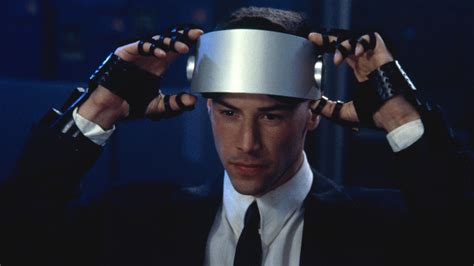
Johnny Mnemonic
Johnny Mnemonic is a 1995 cyberpunk film directed by Robert Longo in his directorial debut. William Gibson, who wrote the 1981 short story, wrote the screenplay. Keanu Reeves plays Johnny, a data courier with an overloaded brain implant designed to securely store confidential .
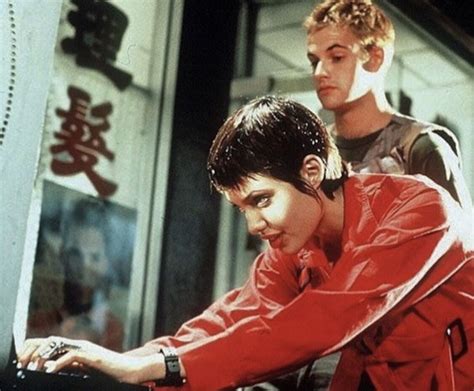
Hackers
On August 10, 1988, 11-year-old Dade "Zero Cool" Murphy's family is fined $45,000 for his crashing of 1,507 computer systems, causing a seven-point drop in the New York Stock Exchange. He is banned from computers and touch-tone telephones until he is 18 years old. On his 18th birthday, he hacks into a local television station and changes the broadcast to an episode of The Outer Limits. Another hacker (handle "Acid Burn") counters Dade's attack. Dade identifies himself as "Crash Override".
At school, Dade becomes part of a group of hackers: Ramon "The Phantom Phreak" Sanchez, Emmanuel "Cereal Killer" Goldstein, Paul "Lord Nikon" Cook (named for his photographic memory), Joey Pardella (a novice hacker without an alias and the youngest member) and Kate "Acid Burn" Libby – the hacker who kicked him out of the TV station earlier.
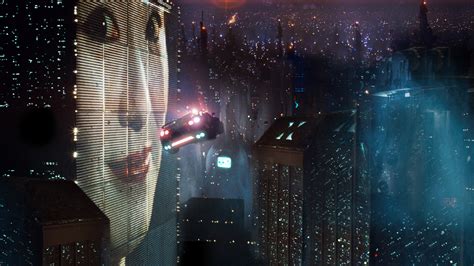
Blade Runner
In 2019 Los Angeles, former police officer Rick Deckard is detained by Officer Gaff, who likes to make origami figures, and is brought to his former supervisor, Bryant. Deckard, whose job as a "blade runner" was to track down bioengineered humanoids known as replicants and terminally "retire" them, is informed that four replicants are on Earth illegally. Deckard begins to leave, but Bryant ambiguously threatens him and Deckard stays. The two watch a video of a blade runner named Holden administering the Voight-Kampff test, which is designed to distinguish replicants from humans based on their emotional responses to questions. The test subject, Leon, shoots Holden on the second question. Bryant wants Deckard to retire Leon and three other Nexus-6 replicants: Roy Batty, Zhora, and Pris.
Bryant has Deckard meet with the CEO of the company that creates the replicants, Eldon Tyrell, so he can administer the test on a Nexus-6 to see if it works. Tyrell expresses his interest in seeing the test fail first and asks him to administer it on his assistant Rachael. After a much longer than standard test, Deckard concludes privately to Tyrell that Rachael is a replicant who believes she is human. Tyrell explains that she is an experiment who has been given false memories to provide an "emotional cushion," and that she has no knowledge of her true nature.